03 / Render infrastructure · VisCommerce
HD Render Pipeline
Turning scene JSON into production renders.
A Python rendering service that assembles Blender scenes from structured data, produces images or video, and exports source files for Gaussian-splat processing.
- My role
- Backend, Blender automation & cloud workflow
- Technology
- Python / Flask / REST / Blender 5.1 / RunPod / AWS S3
The problem
Production rendering requires more than opening a Blender file. Models, materials, lighting, animation, job folders, long-running processes and output delivery all need to be coordinated consistently from incoming scene data.
What I built
I built Flask and RunPod entry points around a shared RenderManager. It prepares each job, starts Blender in background mode, assembles the scene through reusable Python modules and delivers small results by email or larger files through AWS S3.
The challenge
Keeping scene assembly and file handling repeatable across a local queued API and a serverless worker, while supporting still images, video and source-file exports.
Implementation approach
One manager coordinates both execution environments, while focused Blender modules handle scene setup, model loading, animation, lighting and materials. A separate Gaussian-splat path exports a .blend file, uploads it to S3 and notifies the downstream service by webhook.
Workflow overview
Turning scene JSON into production renders.
- 01JSON or API job
- 02Blender scene assembly
- 03Headless render or export
- 04Email, S3 or webhook
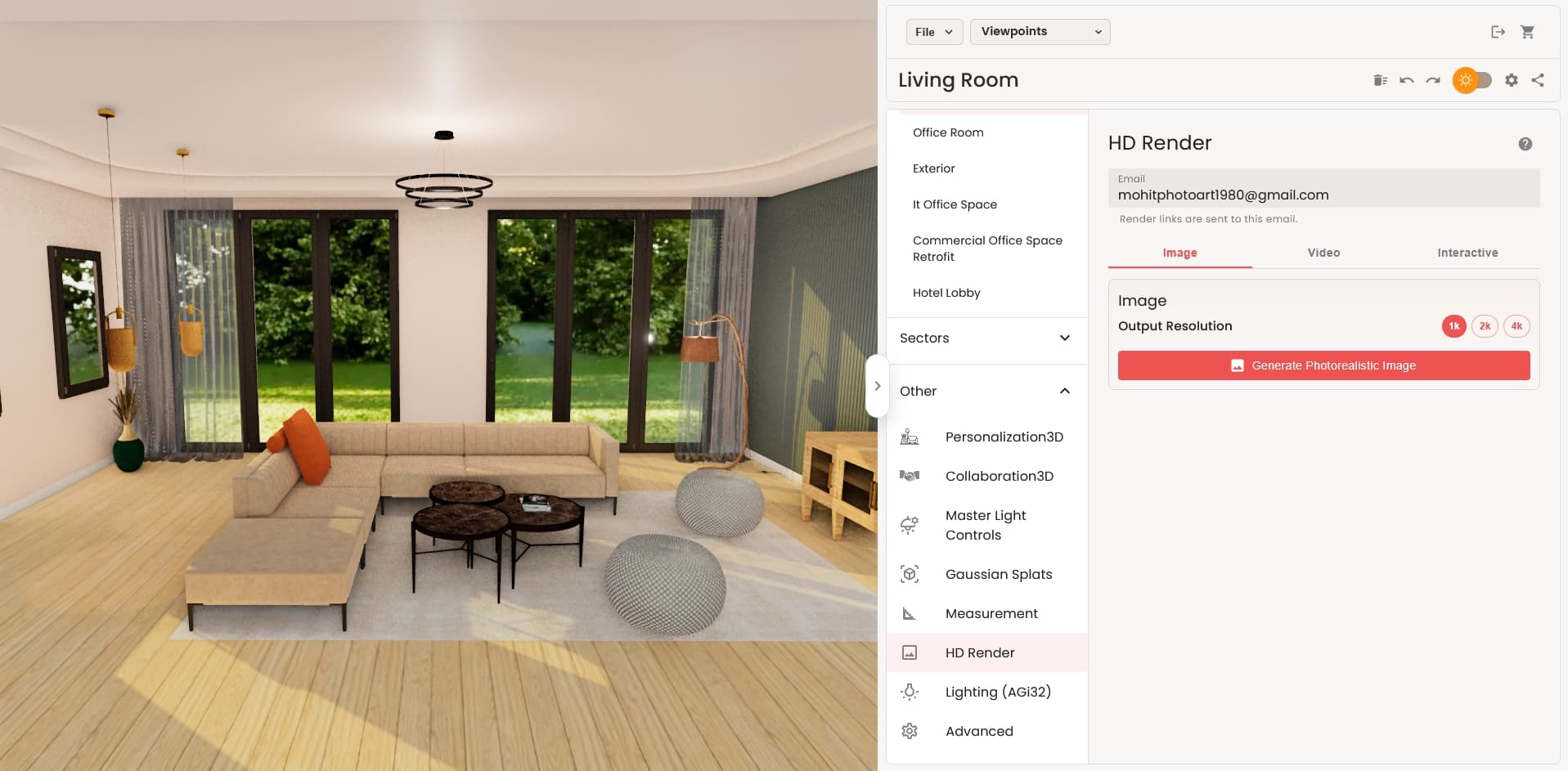
A simplified view of the product workflow.
The result